Motion
Tania MAXWELL (Northern Victoria) (16:18):
I rise to speak on the Workplace Safety Legislation and Other Matters Amendment Bill 2021. This bill is another omnibus bill. It makes changes to eight different acts, including extending compensation provisions to allow those with serious silicosis to make a subsequent claim and extending weekly pensions to dependent children of deceased workers until they are 25 years of age if they have a disability or are a full-time student or apprentice.
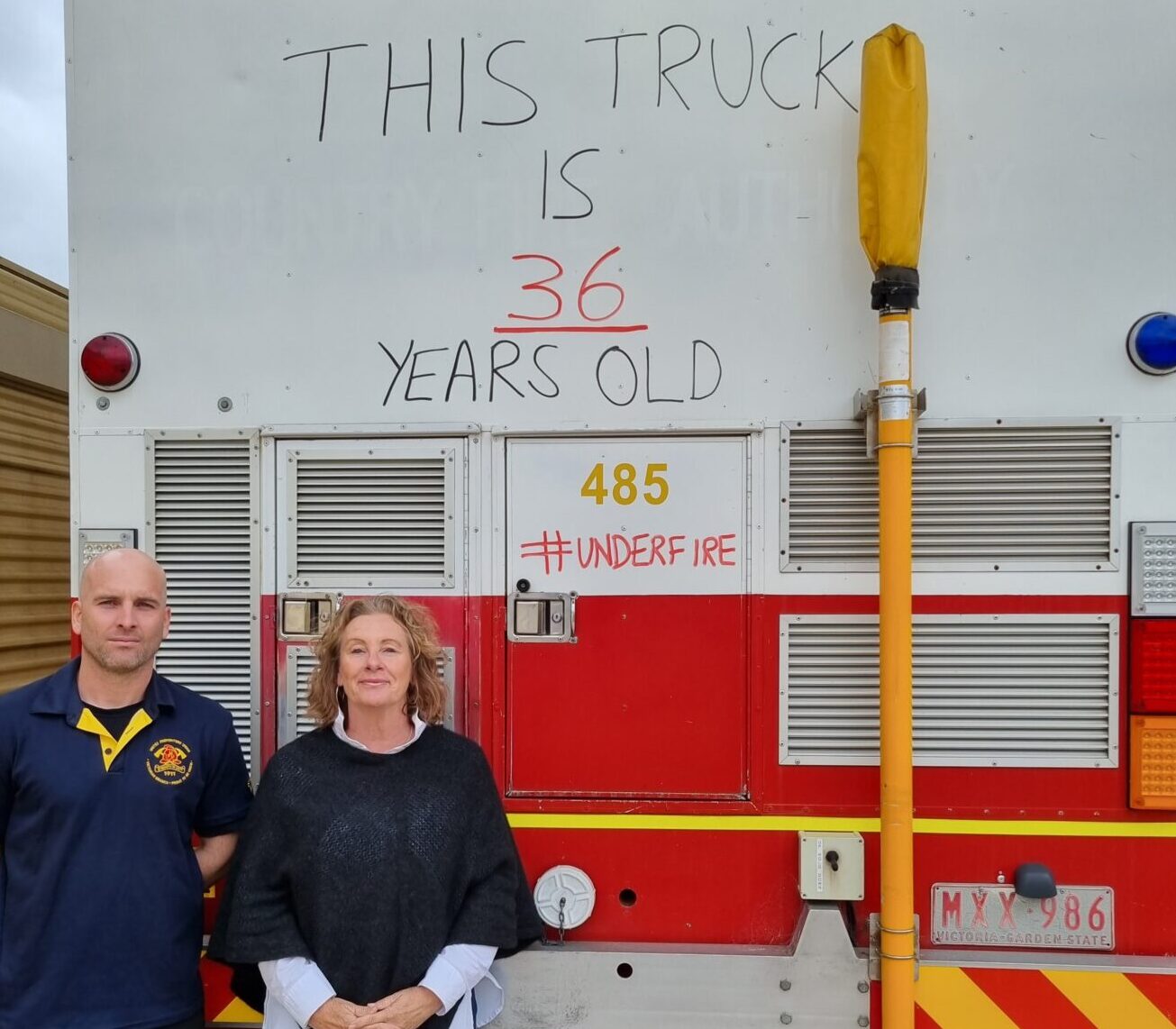
The bill extends the presumptive cancer rights for firefighters to vehicle and equipment maintenance employees. This is something that we consulted widely on and considered extremely carefully. We understand this will affect around 100 workers, predominantly diesel mechanics or district mechanical officers. I sought clarity on the circumstances in which vehicles are repaired on a fireground and the circumstances in which a worker may be exposed. There have been, and still are, situations where these workers were undoubtedly exposed to cancer-causing chemicals and particles.
We recognise the quite unique exposure of firefighters to toxins that has elevated their risk of cancer and that these rights were long pursued and are very important to both career and volunteer firefighters. As I have mentioned before, I lost a dear friend before Christmas who was a longstanding member of the CFA and contracted cancer. He was very grateful for the presumptive rights that he was afforded.
There is some concern, particularly from the United Firefighters Union, that removing the term ‘firefighter’ and replacing it with ‘person’ broadens the scheme. They fear it will be diluted in the process, and I respect that concern. But we have considered that while diesel mechanics may not be in a consistent, active firefighting role, in attending a fireground they may experience exposure to a range of deadly chemicals and toxins. In how the presumptive rights are crafted there are requirements to qualify and rebuttal provisions. While we recognise that there may be very few mechanics that attend firegrounds, if they are exposed to fire and develop cancer, they should have presumptive rights to compensation. Let us hope they never have to use them.
Women firefighters have to date been too low in numbers for research to determine the risk of developing female-specific cancers from exposure to fire. However, I am continuing to pursue this with the government, as I strongly feel we should be taking a precautionary approach, a preventative approach, in the interests of fairness and equality and extend the schedule to include female-specific cancers. It would have been a very welcome announcement today, being International Women’s Day. I have undertaken consultation with members of the fire services, unions, volunteers and academics, and there is broad support for this precautionary principle to apply, and it is something I will continue to push for.
I turn now to another important aspect of the bill, which is an amendment to the Victims of Crime Assistance Act 1996. This bill will prohibit the tribunal giving notice of the time and place of a hearing to a person who committed or is alleged to have committed an act of family violence or certain sexual offences.
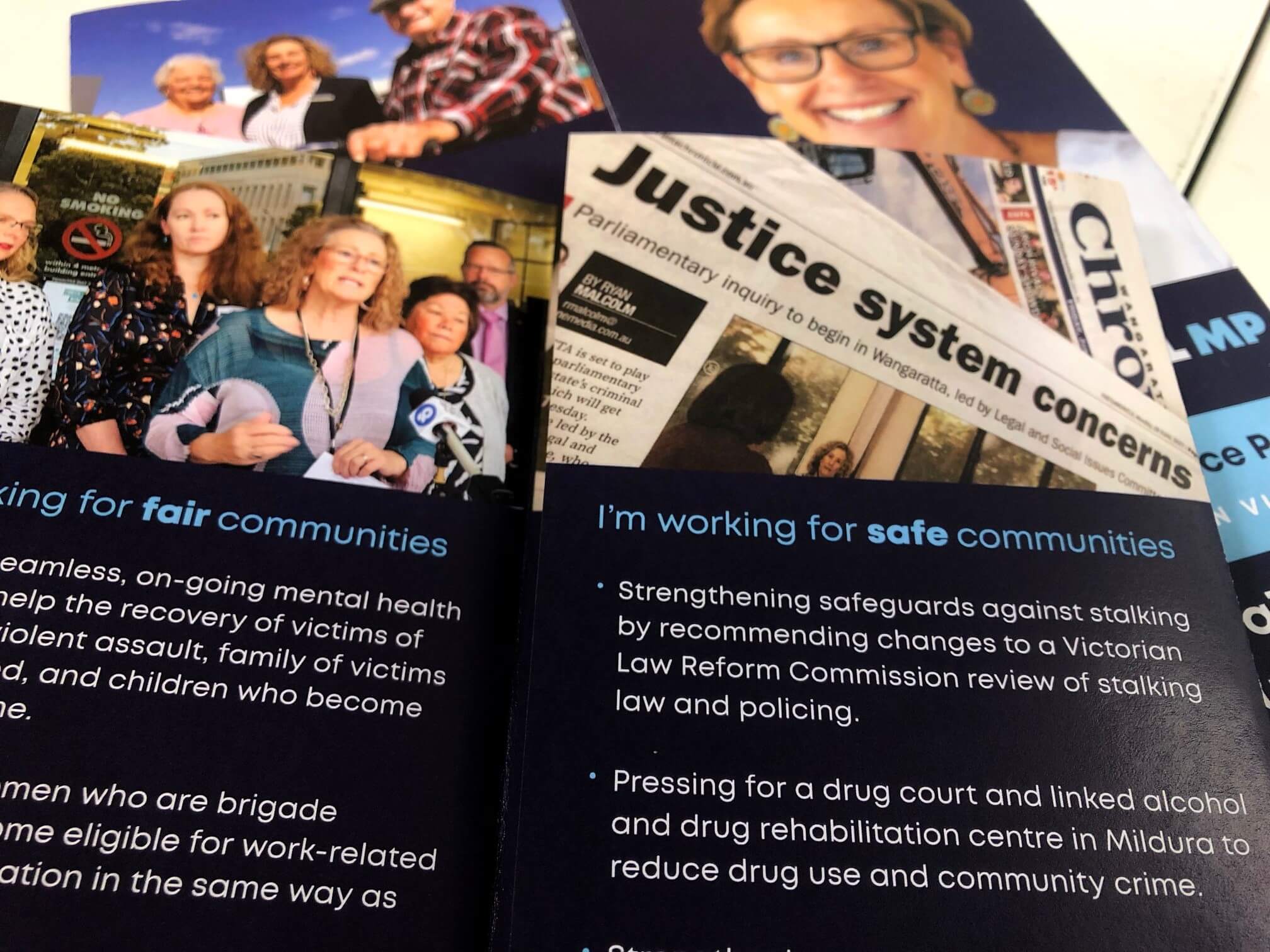
This is a welcome protection for victims, but we think it should go further, and I will be proposing amendments to extend this to offences of stalking, threats to kill and threats to inflict serious injury. I will be asking for those amendments to be circulated later as we head into the committee of the whole.
The serious offences of stalking or making threats to kill or threats to inflict serious injury can occur within the context of family violence, but they also exist outside of that context. The Victorian Law Reform Commission consultation paper on responses to stalking cited 13 872 offences recorded by police in Victoria, with stalking in the context of family violence reported at only a slightly higher rate than non-family violence stalking. It certainly shows the prevalence.
Similarly, in the eight years to 31 December 2019 more than 66 000 threat offences were recorded by police in Victoria. Nearly two-thirds of those threats were threats to kill, and more than half were associated with family violence. That leaves a substantial proportion that were unrelated to family violence, and we must provide protection and support for those victims in the same way that we protect victims of family violence.
Threat offences cause immediate fear but also limit victims’ freedom of choice. Someone who has a fixation on another, perhaps without even knowing them personally, can wreak havoc on the life of their victim, and we are all very familiar with the death of Celeste Manno.
An opportune offender can use the knowledge of a Victims of Crime Assistance Tribunal ((VOCAT) hearing to further offend, such as putting a tracking device on the victim. Simply being in the vicinity of the tribunal can be an act of intimidation. This alone could deter a victim from even making an application.
The new financial assistance scheme will not require tribunal hearings, which I think will be welcome for most victims, and will eliminate this issue. I will talk more about this amendment during the committee stage, but I hope that the chamber will support us in extending this provision a little further for very serious offences that are known to be markers for future violence and give important protection to victims.
There are other changes to acts in this bill that I will not refer to now and will leave for other speakers to address. I look forward to asking a few questions in the committee stage. I thank the house.
Amendments
Ms MAXWELL:
I move:
1. Clause 87, before line 11 insert—
“(aa) an offence against section 20, 21 or 21A of the Crimes Act 1958 or any corresponding previous enactment; or”.
We agree that alleged offenders of family violence or sexual offences should not be notified of or attend tribunal hearings relating to their victims. While there may be some loose argument that an offender may have some reputational interest in a victim’s assistance claim, it is an affront to the very notion of victim’s assistance that an offender is given the opportunity to be aware of a claim, let alone attend, listen or, even more strongly, participate.
The Victorian Law Reform Commission review into the Victims of Crime Assistance Act 1996 recommends that alleged offenders should not be notified of a victim’s hearing or be allowed to attend. It is our expectation that the new scheme will deliver on this. In the meantime the bill closes part of the loophole but still leaves a serious gap.
I know in the circumstances of Di McDonald the offender was notified of her interim claim and attended the court. Ms McDonald would refute that the offending was in the context of family violence. The offender wanted a relationship, but she did not. What could be described as some malicious mischief resulted in the magistrate denying her interim support and suggesting that she come back when she had a case. Ultimately the offences against Ms McDonald were proven beyond reasonable doubt and her offender received a substantial jail term, so her victim status is very clear.
Many threat and stalking offences do occur in the context of family violence, but around one-third of them do not. The devastating case of Celeste Manno is very clearly in my mind when thinking of the serious indicator that threat offences and stalking will lead to future violence. The reoffending rate for threat offences is double the rate for all offenders in Victoria, and there is no substantial difference in the reoffending rates between family violence and non-family violence offenders. One-third of victims of these serious offences will not be protected by this prohibition unless this amendment passes. It demonstrates the need for the new system to be expedited, but in the meantime we need to make the changes we can to improve safety and support for victims. On that basis I commend these amendments.
Craig ONDARCHIE (Northern Metropolitan):
The state Liberal-Nationals coalition will be supporting these amendments of Ms Maxwell today. Can I thank Ms Maxwell and Karen Rourke from her office for the very comprehensive amendment explainer that brought it to us. This is in some sense, with respect to Ms Maxwell’s explanation, a bit of a no-brainer. This amendment should carry forward as an improvement to this bill, and as a result we will be supporting it.
Ingrid STITT (Western Metropolitan—Minister for Workplace Safety, Minister for Early Childhood):
The government has introduced changes to the Victims of Crime Assistance Act 1996 (VOCA Act) to remove barriers for victim-survivors of family violence and sexual assault applying for financial assistance at the Victims of Crime Assistance Tribunal (VOCAT). They align with findings and recommendations from the Royal Commission into Family Violence and the Victorian Law Reform Commission (VLRC). VOCAT provides financial assistance to victims of violent crime under the Victims of Crime Assistance Act. Currently VOCAT can notify alleged offenders and allow them to appear at hearings where they have a legitimate interest or substantial interest in the victim’s application for assistance.
In 2018 the Victorian Law Reform Commission reported on its review into the VOCA Act. The government has committed to significantly progress the recommendations of the report in this term of government. The review recommends that the new scheme will place victims at the centre, and therefore the alleged perpetrator of an offence would not be notified of the victim’s hearing and should not be able to attend that hearing under the new financial assistance scheme. Recommendation 21(a) states:
The proposed Act should provide that the objectives of the Act are to:
recognise, on behalf of the state, victims and the impacts of a criminal act on a victim, through the provision of a respectful forum for victims to be heard and to have their experiences properly acknowledged by the state
In doing so, the VLRC found that:
… removing perpetrator notification reflects a trauma-informed approach that prioritises victims’ safety and wellbeing.
Regardless of model, or other technical and procedural reforms implemented, the Commission considers this to be a significant step in prioritising victims’ safety and wellbeing needs and placing victims’ needs at the centre of the state-funded financial assistance process.
Removing perpetrator notification and attendance at hearings reflects a trauma-informed approach to responding to victims of crime. The Royal Commission into Family Violence made a similar finding: that notifying perpetrators and allowing them to attend a VOCAT hearing can traumatise victims.
Exactly which offences and prohibitions should apply to within the current VOCAT legal framework was a complicated decision. The Attorney-General and the Minister for Victim Support considered this in detail with regard to the VLRC’s finding that notifications had a chilling effect for survivors of sexual assault or family violence.
The original amendments made by the government were confined to family violence and sexual offences to balance VOCAT’s needs to gather evidence and determine facts whilst removing barriers and improving victims’ safety in matters where it was identified as most problematic. Offenders’ notifications will not be included as part of the new administrative financial assistance scheme.
The government thanks Ms Maxwell for raising the experiences of victims of stalking and other offences listed in this additional amendment to extend the notification and attendance prohibition to further offences of stalking, threats to kill and commit serious injury. This is supported by the government.
We need to make it clear that there is a balance to be reached between modifications to the current scheme and the work to implement the new scheme. While we reached a position in the bill following the request of stakeholders, we also understand the trauma and negative impacts for many of the victim-survivors who Ms Maxwell has mentioned today and at other times in this place, and this is why we are happy to accept these sensible suggestions.
The government is committed to delivering a new administrative scheme to deliver financial assistance for victims of crime in Victoria. The financial assistance scheme will replace VOCAT, and this is an administrative scheme. No hearings will be required, and therefore there will be no place for alleged offenders. The government amendments included in this bill go beyond the VLRC recommendations to deliver immediate positive outcomes for survivors of family violence and sexual assault prior to the commencement of the FAS.
We need to balance the need to ensure family violence and sexual assault survivors can seek assistance at VOCAT without fear of their abuser being notified of their VOCAT application with the need for VOCAT to appropriately consider an application outside of family violence and sexual offences where illegal activity may have taken place. The Andrews Labor government is committed to implementing the recommendations of the Royal Commission into Family Violence and building a new financial assistance scheme for victim-survivors.
Mr ONDARCHIE:
So that is a yes?
Ms STITT:
It is.
Ms MAXWELL:
I would just like to thank the minister for her words and particularly thank the members of the government who I have collaborated with in regard to these amendments. I thank them for their time and for their support.
Amendment agreed to; amended clause agreed to.
Clause 88 (19:06)
Ms MAXWELL: I move:
2. Clause 88, page 58, before line 1 insert—
“(aa) an offence against section 20, 21 or 21A of the Crimes Act 1958 or any corresponding previous enactment; or”.
Mr ONDARCHIE:
Consistent with the amendment to clause 87, the state Liberal-Nationals coalition will be supporting this amendment and thank Ms Maxwell for bringing it to the house.
Ms STITT:
Similar to our position on clause 87, the government will be supporting Ms Maxwell’s amendment to clause 88.
Amendment agreed to; amended clause agreed to; clause 89 agreed to.
Reported to house with amendments.
Ms STITT (Western Metropolitan—Minister for Workplace Safety, Minister for Early Childhood) (19:08):
I move:
That the report be now adopted.
Motion agreed to.
Report adopted.
Ms MAXWELL:
I move:
1. Clause 87, before line 11 insert—
“(aa) an offence against section 20, 21 or 21A of the Crimes Act 1958 or any corresponding previous enactment; or”.
We agree that alleged offenders of family violence or sexual offences should not be notified of or attend tribunal hearings relating to their victims. While there may be some loose argument that an offender may have some reputational interest in a victim’s assistance claim, it is an affront to the very notion of victim’s assistance that an offender is given the opportunity to be aware of a claim, let alone attend, listen or, even more strongly, participate.
The VLRC review into the Victims of Crime Assistance Act 1996 recommends that alleged offenders should not be notified of a victim’s hearing or be allowed to attend. It is our expectation that the new scheme will deliver on this. In the meantime the bill closes part of the loophole but still leaves a serious gap.
I know in the circumstances of Di McDonald the offender was notified of her interim claim and attended the court. Ms McDonald would refute that the offending was in the context of family violence. The offender wanted a relationship, but she did not. What could be described as some malicious mischief resulted in the magistrate denying her interim support and suggesting that she come back when she had a case. Ultimately the offences against Ms McDonald were proven beyond reasonable doubt and her offender received a substantial jail term, so her victim status is very clear.
Many threat and stalking offences do occur in the context of family violence, but around one-third of them do not. The devastating case of Celeste Manno is very clearly in my mind when thinking of the serious indicator that threat offences and stalking will lead to future violence. The reoffending rate for threat offences is double the rate for all offenders in Victoria, and there is no substantial difference in the reoffending rates between family violence and non-family violence offenders. One-third of victims of these serious offences will not be protected by this prohibition unless this amendment passes. It demonstrates the need for the new system to be expedited, but in the meantime we need to make the changes we can to improve safety and support for victims. On that basis I commend these amendments.
Mr ONDARCHIE:
The state Liberal-Nationals coalition will be supporting these amendments of Ms Maxwell today. Can I thank Ms Maxwell and Karen Rourke from her office for the very comprehensive amendment explainer that brought it to us. This is in some sense, with respect to Ms Maxwell’s explanation, a bit of a no-brainer. This amendment should carry forward as an improvement to this bill, and as a result we will be supporting it.
Ms STITT:
The government has introduced changes to the Victims of Crime Assistance Act 1996 (VOCA Act) to remove barriers for victim-survivors of family violence and sexual assault applying for financial assistance at VOCAT. They align with findings and recommendations from the Royal Commission into Family Violence and the Victorian Law Reform Commission (VLRC). VOCAT provides financial assistance to victims of violent crime under the Victims of Crime Assistance Act. Currently VOCAT can notify alleged offenders and allow them to appear at hearings where they have a legitimate interest or substantial interest in the victim’s application for assistance.
In 2018 the Victorian Law Reform Commission reported on its review into the VOCA Act. The government has committed to significantly progress the recommendations of the report in this term of government. The review recommends that the new scheme will place victims at the centre, and therefore the alleged perpetrator of an offence would not be notified of the victim’s hearing and should not be able to attend that hearing under the new financial assistance scheme. Recommendation 21(a) states:
The proposed Act should provide that the objectives of the Act are to:
recognise, on behalf of the state, victims and the impacts of a criminal act on a victim, through the provision of a respectful forum for victims to be heard and to have their experiences properly acknowledged by the state
In doing so, the VLRC found that:
… removing perpetrator notification reflects a trauma-informed approach that prioritises victims’ safety and wellbeing.
Regardless of model, or other technical and procedural reforms implemented, the Commission considers this to be a significant step in prioritising victims’ safety and wellbeing needs and placing victims’ needs at the centre of the state-funded financial assistance process.
Removing perpetrator notification and attendance at hearings reflects a trauma-informed approach to responding to victims of crime. The Royal Commission into Family Violence made a similar finding: that notifying perpetrators and allowing them to attend a VOCAT hearing can traumatise victims.
Exactly which offences and prohibitions should apply to within the current VOCAT legal framework was a complicated decision. The Attorney-General and the Minister for Victim Support considered this in detail with regard to the VLRC’s finding that notifications had a chilling effect for survivors of sexual assault or family violence.
The original amendments made by the government were confined to family violence and sexual offences to balance VOCAT’s needs to gather evidence and determine facts whilst removing barriers and improving victims’ safety in matters where it was identified as most problematic. Offenders’ notifications will not be included as part of the new administrative financial assistance scheme.
The government thanks Ms Maxwell for raising the experiences of victims of stalking and other offences listed in this additional amendment to extend the notification and attendance prohibition to further offences of stalking, threats to kill and commit serious injury. This is supported by the government.
We need to make it clear that there is a balance to be reached between modifications to the current scheme and the work to implement the new scheme. Whilst we reached a position in the bill following the request of stakeholders, we also understand the trauma and negative impacts for many of the victim-survivors who Ms Maxwell has mentioned today and at other times in this place, and this is why we are happy to accept these sensible suggestions.
The government is committed to delivering a new administrative scheme to deliver financial assistance for victims of crime in Victoria. The financial assistance scheme will replace VOCAT, and this is an administrative scheme. No hearings will be required, and therefore there will be no place for alleged offenders. The government amendments included in this bill go beyond the VLRC recommendations to deliver immediate positive outcomes for survivors of family violence and sexual assault prior to the commencement of the FAS.
We need to balance the need to ensure family violence and sexual assault survivors can seek assistance at VOCAT without fear of their abuser being notified of their VOCAT application with the need for VOCAT to appropriately consider an application outside of family violence and sexual offences where illegal activity may have taken place. The Andrews Labor government is committed to implementing the recommendations of the Royal Commission into Family Violence and building a new financial assistance scheme for victim-survivors.
Mr ONDARCHIE: So that is a yes?
Ms STITT: It is.
Ms MAXWELL:
I would just like to thank the minister for her words and particularly thank the members of the government which I have collaborated with in regard to these amendments. I thank them for their time and for their support.
Amendment agreed to; amended clause agreed to.
Clause 88 (19:06)
Ms MAXWELL:
I move:
2. Clause 88, page 58, before line 1 insert—
“(aa) an offence against section 20, 21 or 21A of the Crimes Act 1958 or any corresponding previous enactment; or”.
Mr ONDARCHIE:
Consistent with the amendment to clause 87, the state Liberal-Nationals coalition will be supporting this amendment and thank Ms Maxwell for bringing it to the house.
Ms STITT:
Similar to our position on clause 87, the government will be supporting Ms Maxwell’s amendment to clause 88.
Amendment agreed to; amended clause agreed to; clause 89 agreed to.
Reported to house with amendments.
Ms STITT (Western Metropolitan—Minister for Workplace Safety, Minister for Early Childhood) (19:08):
I move:
That the report be now adopted.
Motion agreed to.
Report adopted.